
If you’ve ever been to a Brazilian steakhouse, there’s a good chance the dish that stole the show wasn’t the ribeye, the sirloin, or even the lamb chops — it was picanha. Sliced thin off the skewer by a server walking table to table, that little half-moon of seared, salt-crusted beef with a thick cap of golden fat has a way of converting even the most devoted ribeye loyalist. It’s simple, it’s bold, and it’s proof that sometimes the best steak doesn’t need a marinade, a rub, or a fancy sauce — just great meat, salt, fire, and a little patience.
Picanha, known in English-speaking countries as the rump cap or culotte, is the star of Brazilian churrasco, the country’s beloved tradition of fire-grilled meats. What makes picanha special isn’t some complicated technique — it’s actually the opposite. The magic lies in understanding the cut itself, respecting its natural fat cap, and cooking it in a way that lets that fat render slowly, basting the meat as it cooks and creating an incredible crust on the outside while keeping the inside tender and juicy.
This recipe walks through everything you need to know to make authentic, restaurant-quality picanha at home, whether you’re working with a full rotisserie setup, a simple charcoal grill, or even just a hot cast-iron skillet.
What Exactly Is Picanha?
Picanha comes from the top of the rump, sitting right where the sirloin meets the round. It’s a triangular cut, typically covered on one side by a thick layer of fat, and it’s known for being both tender and deeply flavorful, thanks in large part to that fat cap rendering down during cooking.
In many Western countries, this cut isn’t always sold whole or clearly labeled, since butchers often break it down into smaller cuts as part of the sirloin or round. If your local butcher doesn’t carry picanha specifically, ask for the “rump cap” or “culotte steak,” and make sure to request it with the fat cap left intact, since that fat is essential to both the flavor and the traditional presentation of the dish.
Why the Fat Cap Matters So Much
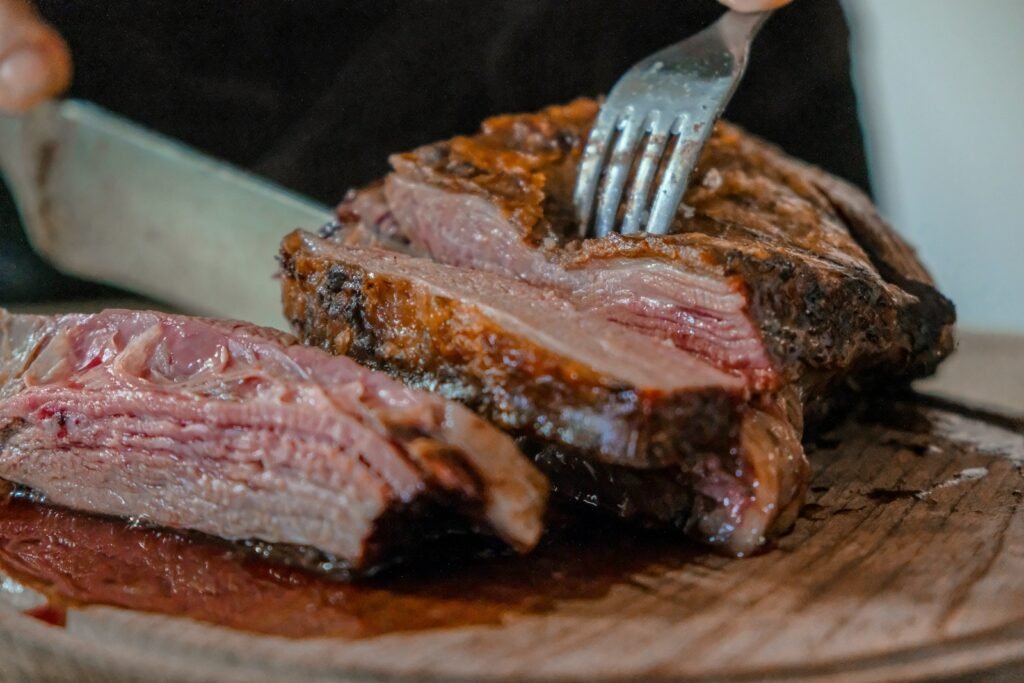
Unlike a lot of Western steak traditions, where visible fat is often trimmed away before cooking, picanha is defined by its fat cap. As the steak cooks, that fat slowly renders and bastes the meat from the outside in, keeping it moist while also creating an incredibly rich, crispy exterior once it’s properly seared. Trimming it away entirely defeats the purpose of cooking picanha in the first place, so resist the urge to cut it off, even if it looks like a thick layer at first glance. You can trim it down slightly if it’s unusually thick, but leaving a solid layer, generally around a quarter to half an inch, is key to getting that authentic result.
Ingredients You’ll Need
This recipe serves about 4 to 6 people, depending on portion sizes and what else is on the table.
- 2 to 3 pounds picanha (rump cap), fat cap intact
- Coarse sea salt (rock salt or kosher salt work well)
- Freshly cracked black pepper, optional
That’s genuinely it for the meat itself. Traditional Brazilian churrasco doesn’t rely on marinades or heavy seasoning blends — the quality of the beef and the technique used to cook it are what carry the dish.
For serving (optional but recommended):
- Farofa (toasted cassava flour mixture)
- Chimichurri sauce
- Grilled vegetables or pão de queijo (Brazilian cheese bread)
- White rice and black beans
Step-by-Step Instructions
Step 1: Prepare the Picanha
Start by patting the picanha completely dry with paper towels. If the fat cap seems unusually thick, trim it down slightly so it’s roughly a quarter to half an inch thick, but don’t remove it entirely. Score the fat cap in a light crosshatch pattern, cutting just through the fat without going into the meat itself. This scoring helps the fat render more evenly and allows the salt to penetrate slightly into that top layer.
Next, cut the picanha against the grain into thick steaks, roughly 1.5 to 2 inches thick, following the natural curve of the muscle. Traditionally, each piece is then curved into a half-moon or “C” shape, with the fat cap on the outside, and threaded onto a skewer through the two ends. This shape is what allows the fat to stay on the outside throughout cooking, continuously basting the meat as it rotates or cooks over the fire.
If you don’t have skewers or aren’t planning to rotisserie the meat, you can skip the skewering step entirely and simply cook the individual steaks directly on a hot grill or in a skillet, which still produces excellent results.
Step 2: Season Generously with Salt
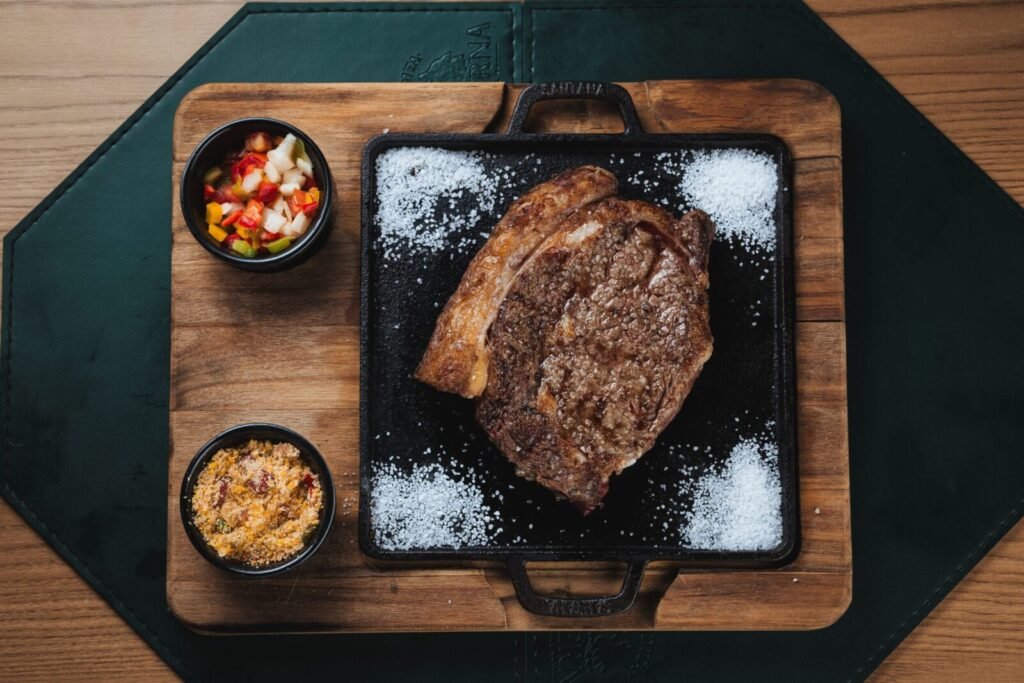
Right before cooking, season the meat generously with coarse sea salt on all sides, pressing it gently into the surface. Traditional Brazilian churrasco relies almost entirely on salt as the seasoning, allowing the natural flavor of the beef to shine through rather than masking it with a complex spice blend. Don’t be shy with the salt here — much of it will fall away or dissolve during cooking, and what remains creates a beautifully seasoned crust.
If you’d like, a light crack of black pepper can be added as well, though this is optional and not traditionally used in most Brazilian steakhouse preparations.
Step 3: Choose Your Cooking Method
Grilling over charcoal (traditional method): Prepare a charcoal grill for direct, high heat. If using skewers, position the meat with the fat side facing the heat source first. Grill for about 15 to 20 minutes total, turning occasionally, until the fat has rendered down and turned golden and slightly crispy, and the internal temperature reaches your desired doneness — about 130°F (54°C) for medium-rare.
Grilling on a gas grill: Preheat one side of the grill to high heat, creating a direct heat zone. Sear the fat side first for about 5 minutes, allowing it to render and crisp slightly, then flip and sear the meat side for another 4 to 5 minutes. Move the steaks to indirect heat if needed to finish cooking through to your preferred doneness without burning the exterior.
Cooking in a cast-iron skillet (indoor method): Heat a heavy cast-iron skillet over medium-high heat with no added oil, since the fat cap will render its own. Place the picanha fat-side down first and let it sear for 5 to 7 minutes, until the fat is golden and much of it has rendered into the pan. Flip and sear the meat side for another 4 to 5 minutes for medium-rare, adjusting time based on the thickness of your steaks and your preferred doneness.
Step 4: Check for Doneness
Regardless of the method, using an instant-read meat thermometer is the most reliable way to hit your desired doneness:
- Rare: 120–125°F (49–52°C)
- Medium-rare: 130–135°F (54–57°C)
- Medium: 140–145°F (60–63°C)
- Medium-well: 150–155°F (66–68°C)
Picanha is traditionally served medium-rare to medium, as this range allows the fat to render fully while keeping the meat itself tender and juicy. Cooking it much past medium risks toughening the meat and losing some of that signature juiciness.
Step 5: Rest and Slice
Once cooked to your desired temperature, remove the picanha from the heat and let it rest for about 5 to 10 minutes before slicing. This resting period allows the juices to redistribute throughout the meat rather than spilling out the moment you cut into it.
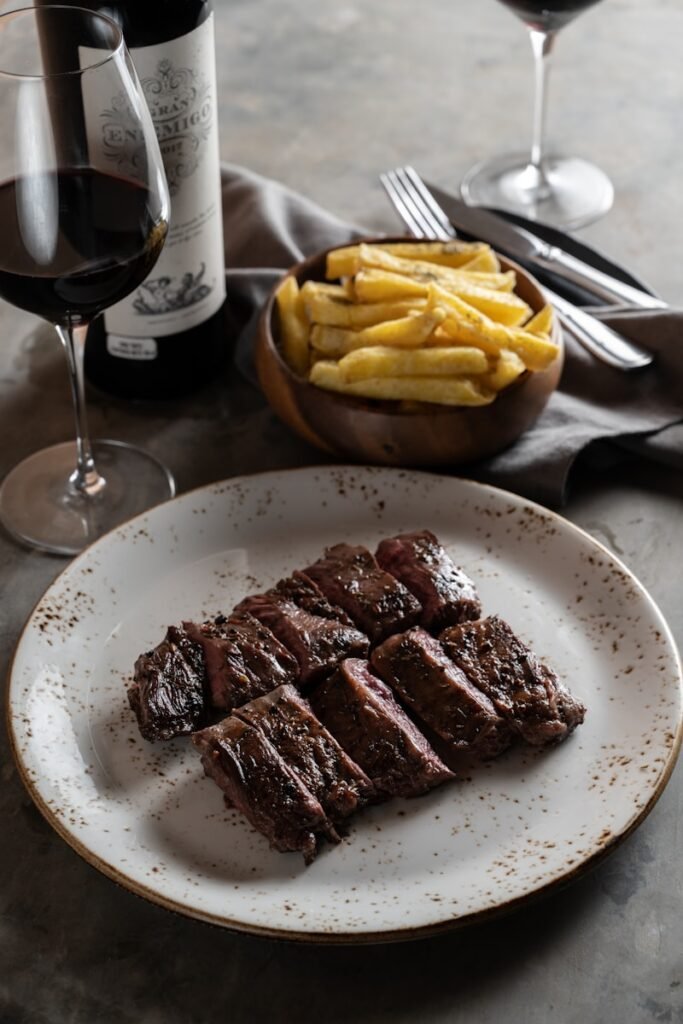
Slice the picanha thinly against the grain, cutting through both the meat and the rendered fat cap in each slice. This is exactly how it’s traditionally served at Brazilian steakhouses, with each thin slice offering a bit of that crispy, flavorful fat alongside the tender meat.
What to Serve With Picanha
A proper Brazilian churrasco spread usually includes a few classic accompaniments that balance out the richness of the meat:
- Farofa, a toasted, buttery cassava flour mixture, adds texture and a slightly nutty flavor that contrasts nicely with the richness of the beef.
- Chimichurri sauce, while more commonly associated with Argentine grilling traditions, has become a popular accompaniment across South American steak culture, adding brightness and acidity to cut through the fat.
- White rice and black beans, a staple pairing throughout Brazil, rounds out the meal and helps balance the richness of the meat.
- Grilled vegetables or pão de queijo, Brazil’s beloved cheese bread, make excellent additions to a full churrasco-style spread.
Tips for Getting It Right
- Don’t skip or trim away all the fat cap. It’s essential to both the flavor and the traditional texture of the dish.
- Season simply. Resist the urge to add a complex spice rub — coarse salt alone is traditional and lets the beef’s natural flavor shine.
- Use high heat. Picanha benefits from a hot, quick sear that renders the fat and creates a flavorful crust without overcooking the interior.
- Always slice against the grain. This is especially important for picanha, since slicing with the grain can result in a noticeably tougher bite.
- Let it rest before slicing. Cutting into the meat too early lets all those flavorful juices run out onto the cutting board instead of staying in the meat.
Final Thoughts
Picanha proves that great steak doesn’t need to be complicated. With just coarse salt, high heat, and a little respect for the cut’s natural fat cap, you can recreate the same bold, satisfying flavor that’s made this dish a centerpiece of Brazilian churrasco for generations. Whether you’re firing up a charcoal grill for a full backyard cookout or searing individual steaks in a cast-iron skillet on a weeknight, this recipe brings that same smoky, rich, unmistakably Brazilian flavor to your own table.
Slice it thin, serve it hot, and don’t be surprised when it becomes the most requested dish at your next cookout.