
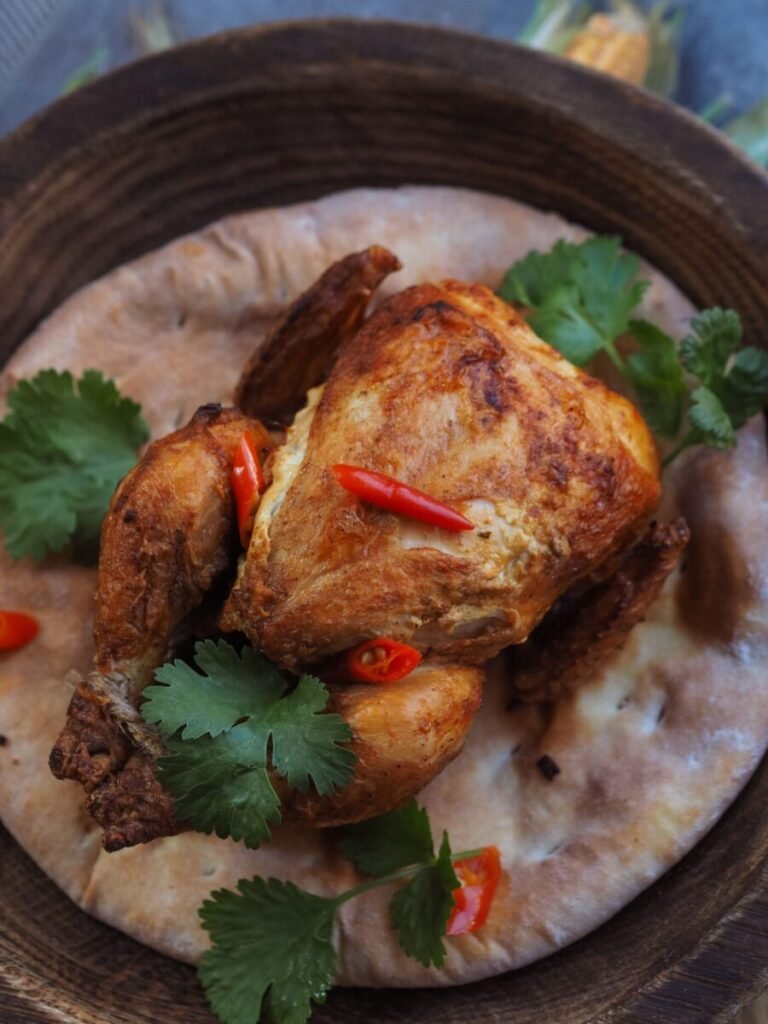
There’s a dish that, once you’ve had it, is hard to forget: a whole chicken, simply seasoned, skewered, and slow-roasted over an open flame until the skin turns deep golden and the meat inside becomes so tender it practically falls off the bone. That dish is sajji, one of the most iconic contributions of Balochi cuisine, and it has spread far beyond its regional roots to become a beloved staple at restaurants and home kitchens across Pakistan and increasingly abroad.
What makes sajji so distinctive isn’t a complicated spice blend or an elaborate cooking process — it’s almost the opposite. Traditional sajji relies on minimal seasoning, usually just salt and sometimes a touch of green chili paste, letting the smoky, slow-roasted flavor of the meat itself take center stage. It’s a dish built on technique and patience rather than a long ingredient list, which is part of what makes it so remarkable the first time you try it.
This recipe walks through how to recreate that same smoky, tender, deeply flavorful sajji at home, whether you have access to an outdoor fire pit, a charcoal grill, or just a conventional oven.
What Exactly Is Sajji?
Sajji originates from the Balochistan region of Pakistan, where it’s traditionally made using a whole young chicken or, in some versions, lamb, marinated simply and then skewered onto a long metal rod. The skewer is planted upright near an open wood or charcoal fire, allowing the meat to slow-roast from the radiant heat rather than being placed directly over the flame. This indirect method of cooking is key to sajji’s texture, giving the meat plenty of time to cook through gently while developing a smoky char on the outside without burning.
While the traditional preparation calls for an open fire setup that isn’t practical for most home cooks, this recipe adapts the technique for more accessible methods, including a charcoal grill and a standard home oven, while still capturing that same smoky, tender result as closely as possible.
Why Simplicity Is the Secret
One of the most surprising things about sajji, especially for anyone used to heavily spiced South Asian dishes, is just how minimal the seasoning actually is. Traditional sajji uses little more than salt, sometimes rubbed with raw papaya paste as a natural tenderizer, and occasionally a light coating of green chili and garlic paste for a subtle kick.
This simplicity is intentional. Because the chicken is cooked slowly and develops such a deep, smoky flavor from the roasting process itself, it doesn’t need a heavy spice rub to taste incredible. In fact, over-seasoning sajji tends to mask the very thing that makes it special in the first place — that natural, fire-kissed flavor that develops over a long, slow cook.
Ingredients You’ll Need
This recipe serves about 4 people, using one whole chicken.
For the chicken:
- 1 whole chicken (about 2.5 to 3 pounds), skin on, cleaned and patted dry
For the marinade:
- 2 tablespoons raw papaya paste (or 1 tablespoon plain yogurt as a substitute)
- 1 tablespoon green chili paste, adjusted to taste
- 1 tablespoon garlic paste
- 1 tablespoon lemon juice
- 2 tablespoons vegetable oil
- 1 ½ teaspoons salt, or to taste
- ½ teaspoon black pepper
For basting while roasting:
- 2 tablespoons melted ghee or butter
For serving:
- Sajji rice (a fragrant, mildly spiced rice traditionally served alongside sajji), or plain steamed rice
- Naan or roti
- Sliced onions and lemon wedges
- Green chutney, optional
Step-by-Step Instructions
Step 1: Prepare the Chicken
Start with a whole chicken, ideally a smaller, younger bird, since traditional sajji uses young chickens for their tenderness. Remove any excess fat and pat the chicken completely dry with paper towels, both inside and out. Using a sharp knife, make a few shallow slits across the thickest parts of the chicken, such as the thighs and breast, to help the marinade penetrate more deeply and to ensure even cooking throughout.
Step 2: Prepare the Marinade
In a small bowl, combine the raw papaya paste, green chili paste, garlic paste, lemon juice, vegetable oil, salt, and black pepper. Mix everything together into a smooth, thick paste.
Raw papaya paste is traditionally used here because the natural enzymes in raw papaya act as a tenderizer, helping break down the proteins in the chicken and resulting in that signature fall-off-the-bone texture sajji is known for. If raw papaya isn’t available, plain yogurt makes a reasonable substitute, offering some tenderizing effect along with a subtle tang, though the texture won’t be quite identical to the traditional version.
Step 3: Marinate the Chicken
Rub the marinade generously all over the chicken, making sure to get it into the slits you made earlier, as well as under the skin where possible for deeper flavor penetration. Cover the chicken and refrigerate for at least 4 hours, though marinating overnight will give you a more deeply flavored and tender result.
Step 4: Skewer or Prepare for Roasting
If you’re using a rotisserie attachment or a long skewer setup, thread the whole chicken onto the skewer securely, running it through the length of the bird from the cavity through the neck area, positioning it as centrally as possible so it cooks evenly as it rotates.
If you don’t have access to a rotisserie setup, you can still achieve excellent results using a whole chicken roasted in the oven or on a covered grill using indirect heat, which we’ll cover in the cooking methods below.
Step 5: Choose Your Cooking Method
Traditional-style over charcoal (with a rotisserie or vertical skewer): Prepare a charcoal fire and let it burn down until you have a bed of glowing coals rather than an open flame, since sajji is meant to cook via steady radiant heat rather than direct fire contact. Position the skewered chicken near the coals, but not directly over them, rotating occasionally if you don’t have an automatic rotisserie. Cook for about 1 to 1.5 hours, depending on the size of the chicken, basting occasionally with melted ghee, until the internal temperature reaches 165°F (74°C) in the thickest part of the thigh and the skin has developed a deep golden-brown color.
On a covered grill using indirect heat: Set up your grill for indirect heat by lighting coals or burners on one side only, leaving the other side empty. Place the chicken on the cooler side of the grill, close the lid, and cook for about 1 to 1.5 hours, turning occasionally and basting with melted ghee every 20 minutes or so, until it reaches the same internal temperature of 165°F (74°C).
In a conventional oven: Preheat your oven to 375°F (190°C). Place the marinated chicken on a roasting rack set inside a baking tray, allowing air to circulate underneath for more even cooking. Roast for about 60 to 75 minutes, basting with melted ghee every 20 minutes, until the internal temperature reaches 165°F (74°C) and the skin is deeply golden and slightly crisp. For an extra touch of smokiness in the oven method, you can place a small piece of lit charcoal in a small heatproof bowl inside the oven briefly, covering the tray loosely with foil for a few minutes to infuse a subtle smoky aroma, then removing it before continuing to roast.
Step 6: Rest Before Serving
Once cooked, let the chicken rest for about 10 minutes before carving. This allows the juices to redistribute throughout the meat, ensuring every piece stays moist and tender rather than drying out the moment you cut into it.
Step 7: Carve and Serve
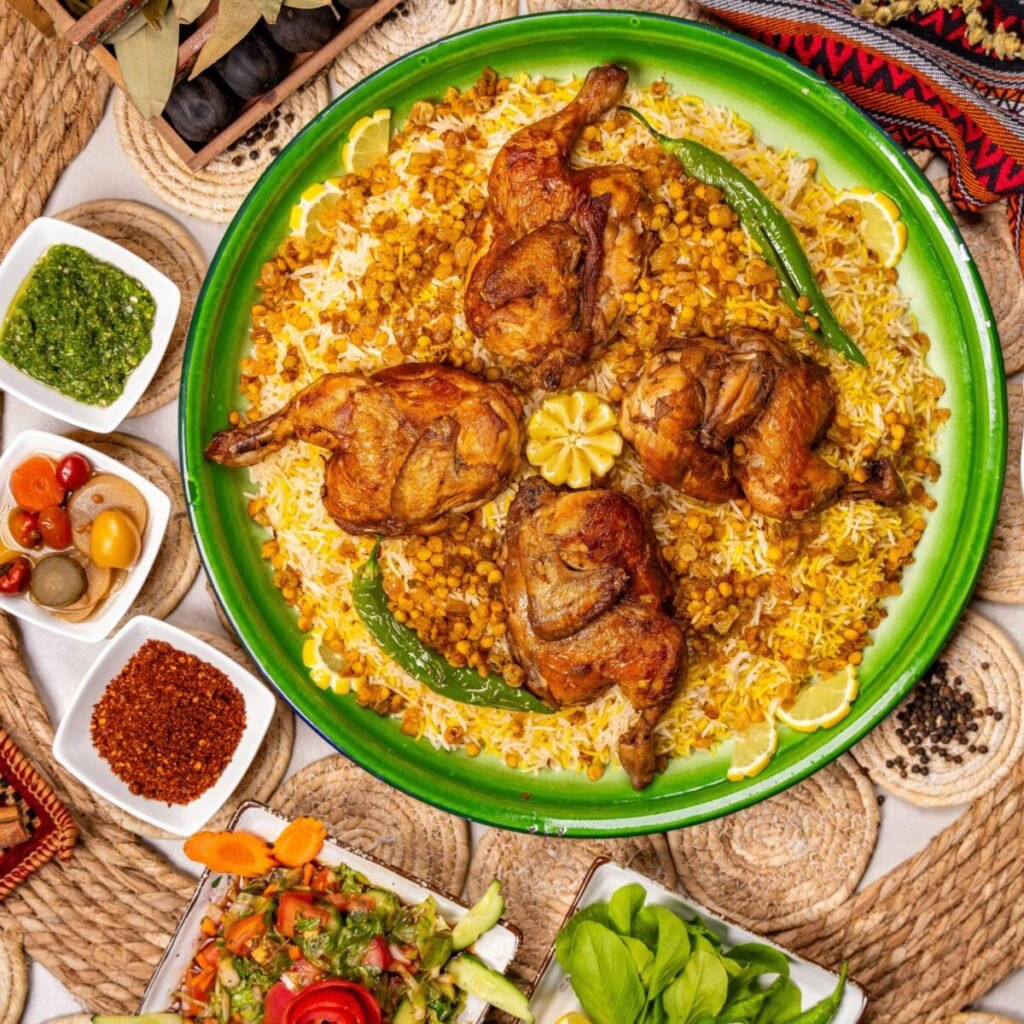
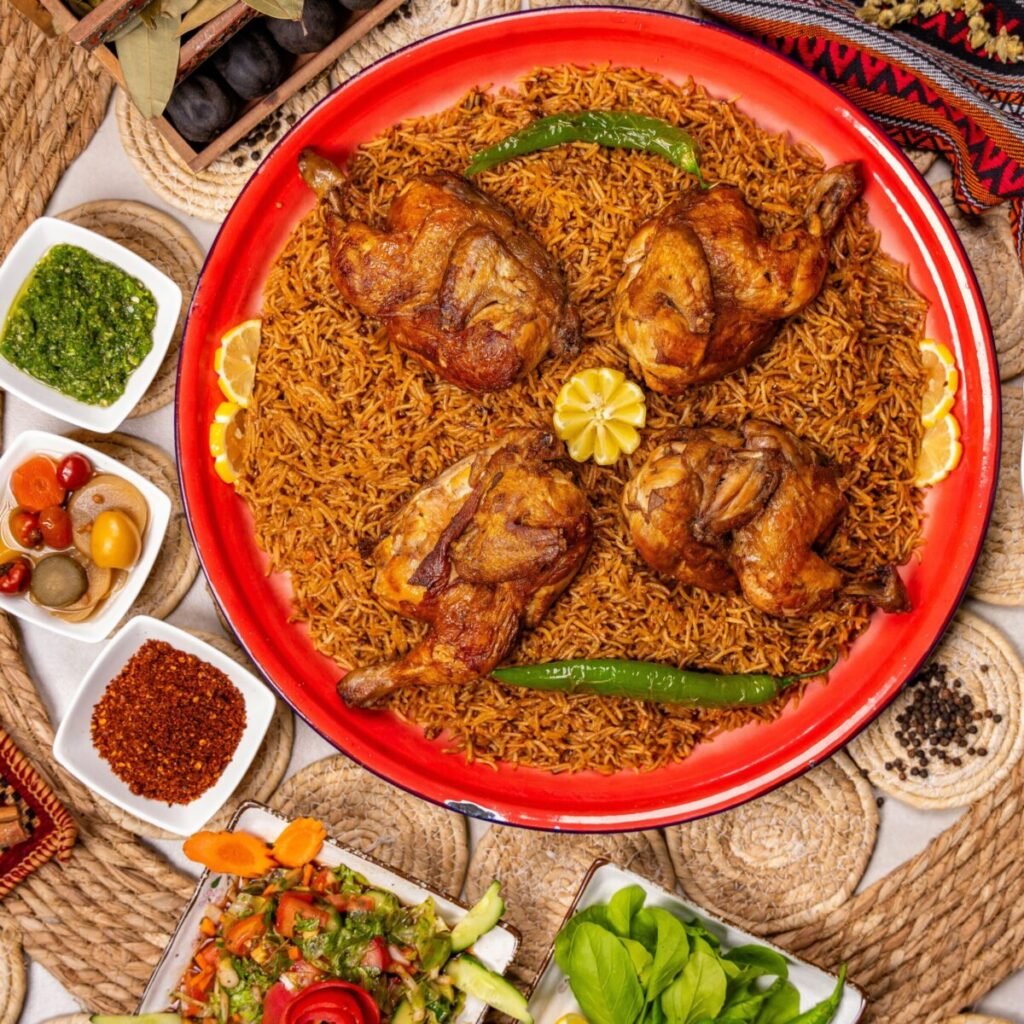
Carve the chicken into pieces, keeping the skin intact on each piece as much as possible, since that crispy, smoky skin is one of the best parts of a well-made sajji. Serve hot, ideally alongside sajji rice, which is typically flavored with whole spices and a bit of the chicken’s own drippings, along with naan or roti, sliced onions, and lemon wedges for squeezing over the top right before eating.
What to Serve With Chicken Sajji
A proper sajji spread usually includes a few classic accompaniments:
- Sajji rice, a fragrant rice dish often cooked with whole spices like cardamom, cinnamon, and bay leaves, sometimes incorporating some of the chicken’s drippings for extra flavor.
- Naan or roti, perfect for scooping up pieces of tender chicken alongside the rice.
- Raw onions and lemon wedges, offering a sharp, acidic contrast to the rich, smoky meat.
- Green chutney, made from fresh coriander, mint, and green chilies, adds a cool, herby brightness that pairs beautifully with the smokiness of the chicken.
Tips for the Best Sajji
- Use a younger, smaller chicken if possible. Traditional sajji relies on young chickens for their natural tenderness, and this holds true even when adapting the recipe for a home kitchen.
- Don’t skip the raw papaya, if you can help it. Its natural tenderizing effect makes a noticeable difference in the final texture compared to using yogurt alone.
- Keep the seasoning minimal. Resist the urge to add a heavy spice rub — the beauty of sajji lies in its simplicity, letting the smoky roasting process do most of the flavor work.
- Baste regularly while cooking. Whether you’re using a grill, an open fire, or an oven, regular basting with melted ghee keeps the skin from drying out and helps it develop that deep golden color.
- Use indirect heat, not direct flame. Sajji is meant to cook slowly from radiant heat rather than being seared directly over an open fire, which is what gives it that tender, evenly cooked texture throughout.
- Let it rest before carving. Cutting into the chicken too soon lets all those flavorful juices spill out instead of staying in the meat.
Storage and Leftovers
Leftover sajji keeps well in an airtight container in the refrigerator for up to 3 days. To reheat, warm it gently in a 300°F (150°C) oven until heated through, which helps preserve the texture of the skin better than microwaving. Leftover meat can also be shredded and used in wraps, sandwiches, or tossed into a simple rice pilaf for an easy next-day meal.
Final Thoughts
Chicken sajji is a wonderful reminder that some of the most memorable dishes come from restraint rather than complexity. With just a handful of ingredients and a slow, patient cooking process, you can recreate that same smoky, tender, deeply satisfying flavor that’s made sajji a beloved centerpiece of Balochi cuisine for generations. Whether you’re firing up a charcoal grill for an outdoor gathering or adapting the recipe for your home oven on a quieter evening, this dish brings a little bit of that fire-roasted magic to your own table.
Carve it up, serve it hot, and enjoy every smoky, tender bite.